Understanding economics
[The art world]
This painting has lost most of its value. It could have been sold easily for £45,000 but something happened that meant it sold for a mere £7500.
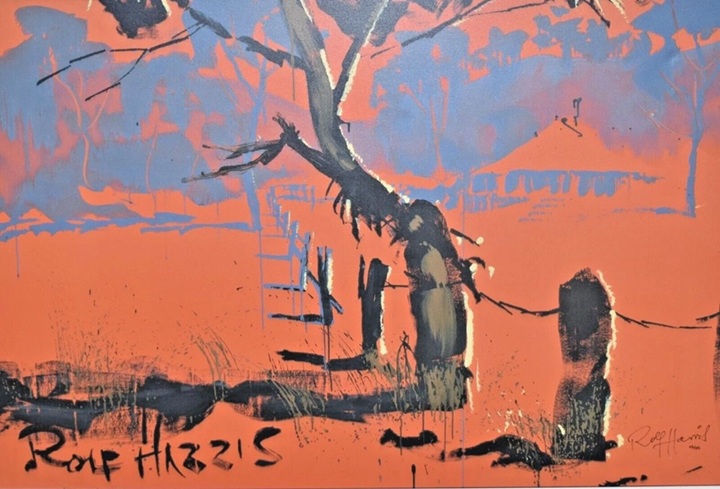
One could explore the morality of art sales relating to tarnished public figures. However, I want you to think about where the value went. Where did that £37,500 disappear to?
Conversely paintings can go up in value too. Where does the money, the value, appear from or vanish to. Understanding how the money and value appears and disappears helps you understand a little more about economics. Economics and the dynamics of market forces.
The value of all art
The total value of all art; how much all art is worth collectively. Every piece. That total value of all art can change. Speculators can enter the market hoping to profit and use art as investments. Some are forced to sell, possibly to pay death duties. Art in general can gain or lose popularity. Hence, the value of all art in the world will fluctuate a little. Sometimes steadily increasing, sometimes dropping wildly during a period of global crisis. Hold that notion in your mind.
To understand what is happening when an individual piece of art goes up in price quickly or crashes overnight, we need to think in terms of all things being equal. We shall set aside the general market state for now.
Contemporary art
People are busy in their sheds knocking out all kinds of art and lots of things that they think is art. Lots of wannabees, busy printing cash via pen, paint, ink, and pieces of fabric. Each new piece of art doesn’t necessarily add to the sum of all art. All it does is add to the number of art items now present in the modern, contemporary art scene. Much of it will be somewhat disposable; consumable art. Hung on a wall for a short while and binned. A few pieces hang around for a good while though. The number of pieces available for sale can increase as more and more people have a go at making something of themselves in the art world. The number of buyers for such art often stays static. So, with a fixed level of demand, something has to give. Prices fall, a lot of it never gets sold.
The number of pieces available for sale can increase as more and more people have a go at making something of themselves in the art world. The number of buyers for such art often stays static. So, with a fixed level of demand, something has to give. Prices fall, a lot of it never gets sold.
Get busy
If you create a piece of art, you add to the number of art works available. The money available or stored in art, with all things being equal, does not change. Therefore, your creation takes from the pieces already in the market. Essentially, all other art works on sale are devalued. Maybe by a tiny percentage.
The reverse is also true. Given that the picture I showed you has lost £37,500, all other art works become a little bit more valuable. That £37,500 lost is other people's gain. The gain is spread thinly across all art works in the market.
Which shall we display today
There are vast quantities of fine art, oil paintings etc that are stored in the back rooms of the major art galleries. Often ten or more stored for each one on display. Were the galleries to sell these in a hurry, they would struggle to get enough buyers willing to pay what they are deemed to be worth. They would sell for a vastly reduced sum because the total amount of money available is limited.
Perhaps some money would be found to bolster the price a little as a sense of pity and respect seeps into people’s conscious. However, it would not be enough to pay the ‘true’ value of the works.
The total value of all art works is a theoretical total. Indeed, the total it could be sold for can change when art in general becomes more popular. However, the more on the market, the more the auction houses have been asked to sell, the more difficult it is to sell each piece.
Fake or authentic
If you have ever watched a programme where art detectives try to prove that a painting is not a fake, rooting for them is a mistake. Don’t wish the owner good luck in proving it is genuine. If they manage to do so, the price it ought to fetch will jump considerably. That will in turn make any art you own worth corresponding, proportionally less. Besides the painting never changed. It stays the same.
Ask yourself this. Would you pay ten, twenty, a thousand times as much for a house if you can prove that someone fashionable designed and built it? The quality ought to matter the most, but it doesn’t seem to be that way in the art world. Who are the fools?
24th October 2026 © IgnoranceParadox